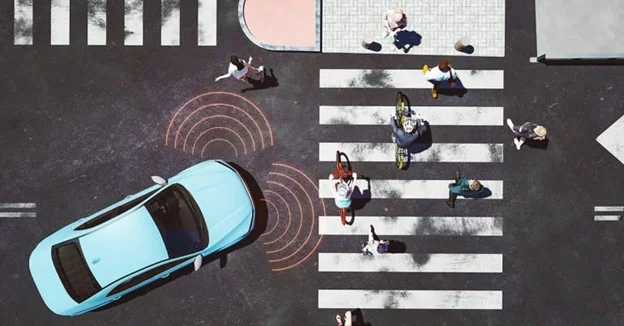
The rapid development of autonomous vehicles is expected to create both significant challenges and strategic opportunities for the global motor insurance industry. Although the timing and speed of this transformation remain uncertain, the long-term trend is clear: the traditional motor insurance market is likely to shrink as autonomous driving becomes more widespread.
One of the most significant changes will be a shift in liability from drivers and vehicle owners toward automakers, technology companies, and software providers. As a result, closer cooperation between insurers, automakers, and technology companies will become increasingly important, potentially transforming insurers’ traditional business models and creating new legal challenges.
A major paradox for insurers will be that accidents may become less frequent, while individual claims may become more expensive. Autonomous vehicles are equipped with sophisticated and costly sensors, cameras, computers, and software, making repairs significantly more expensive than those of conventional vehicles.
In the short term, insurers may face additional pressure from the growth of shared mobility, autonomous fleets, and robotaxis, which could reduce private vehicle ownership and consequently the demand for traditional personal motor insurance. Vehicles used primarily for everyday transportation are likely to be the most vulnerable to this structural change.
Over the longer term, the insurance market may experience a gradual transition from growth and stabilization toward structural decline, particularly in developed markets. As autonomous mobility and shared transportation expand, the number of privately owned vehicles and road accidents may decrease significantly.
Perhaps the most important transformation concerns the concept of liability. In conventional vehicles, the driver is generally responsible for an accident. With autonomous vehicles, however, responsibility may depend on whether the accident was caused by a hardware failure, software defect, sensor malfunction, autonomous driving system failure, or human-machine interaction. Consequently, liability could increasingly shift from the driver to the vehicle manufacturer, software developer, or technology provider. Legislators, including policymakers in Iran, should therefore begin developing appropriate legal and insurance frameworks for this emerging environment.
Another possible development is the integration of insurance into the vehicle purchase or mobility service itself. Instead of consumers purchasing motor liability insurance separately, insurance coverage could increasingly be embedded into the vehicle, subscription, or mobility service. This could lead to new business models based on cooperation between automakers, technology companies, and insurers.
Data will become a critical asset for the future insurance industry. Autonomous and connected vehicles generate enormous amounts of information that can help insurers assess risk more accurately, develop personalized pricing models, investigate accidents, and improve claims management. At the same time, data access, privacy, cybersecurity, and algorithmic fairness will become major regulatory and operational concerns.
Autonomous vehicles will also introduce new categories of risk, including software and hardware failures, cyberattacks, data breaches, network disruptions, operational risks associated with autonomous fleets, and ethical issues related to automated decision-making. Consequently, products such as cyber insurance, technology liability insurance, and product liability insurance are likely to become increasingly important.
The insurers best positioned to succeed in this transformation will likely be those with diversified business portfolios, strong technological capabilities, advanced data analytics, and the ability to collaborate with automakers and technology companies.
All In all Autonomous vehicles will not simply reduce the number of road accidents; they are likely to reshape the entire motor insurance value chain, from product design and risk assessment to pricing, claims management, distribution, and liability allocation.
The insurance industry is therefore moving from a traditional model based on the principle that “the driver is responsible” toward a more complex framework in which responsibility may be shared among the driver, vehicle manufacturer, software developer, and technology provider.
This shift represents one of the most significant future transformations in motor third-party liability insurance and highlights the need for regulators and insurers to prepare today for the insurance ecosystem of autonomous mobility.
https://www.lombardodier.com/insights/2026/august/autonomous-vehicles.html